


Developing an Architectural Design Vocabulary

Do you have dozens of saved mood board photos but struggle to explain your ideas architectural design ideas?
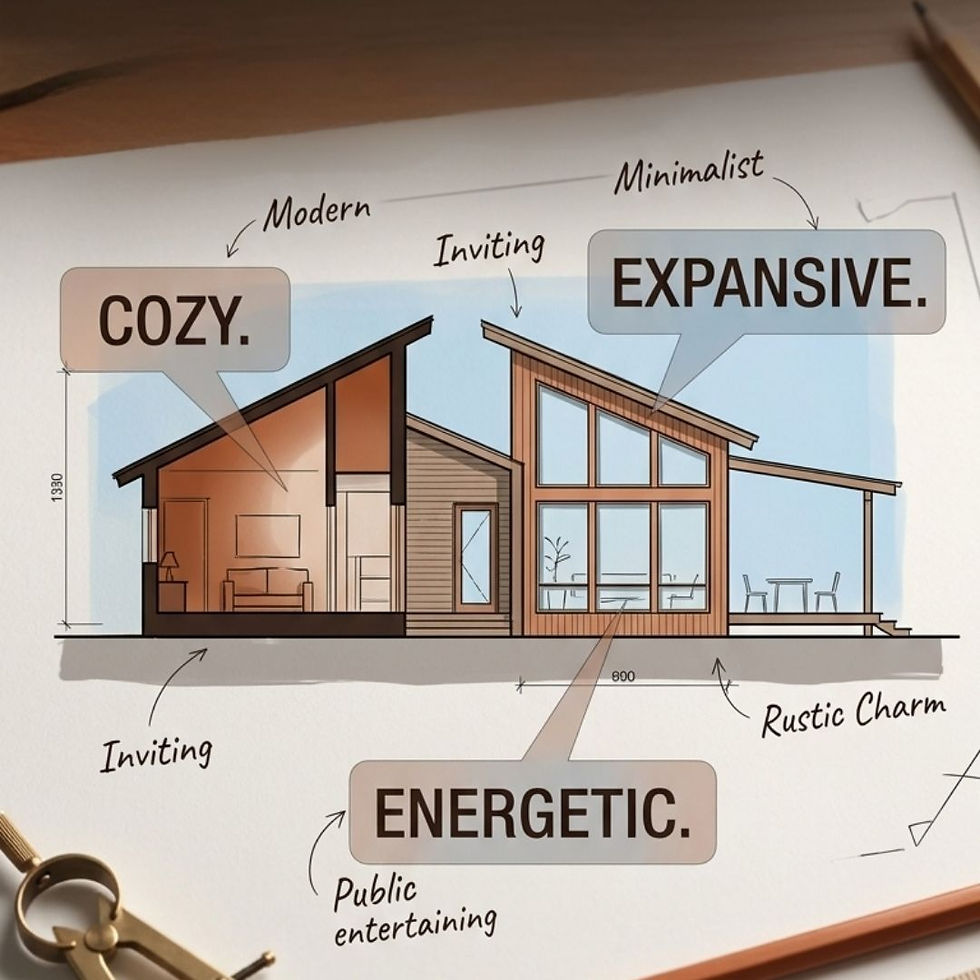
You know exactly how you want your future home to feel, but connecting the space between abstract emotions and a "buildable" form can be a challenge. To help you articulate your vision clearly, I want to share some steps for a framework for cultivating your own design vocabulary:
1. Focus on Emotion and Form Rather than agonizing over materials and technical details, think about the space itself… how do you want to feel when you walk into a room? What is your daily life activity like? Which rooms need to be more “cozy” and which ones need to be more “expansive” and “connected”? If you work out at home, which places need to provide “energy” and where would you need more “vibrance”? Talking about emotion with your architect is a great way to convey your design intent.

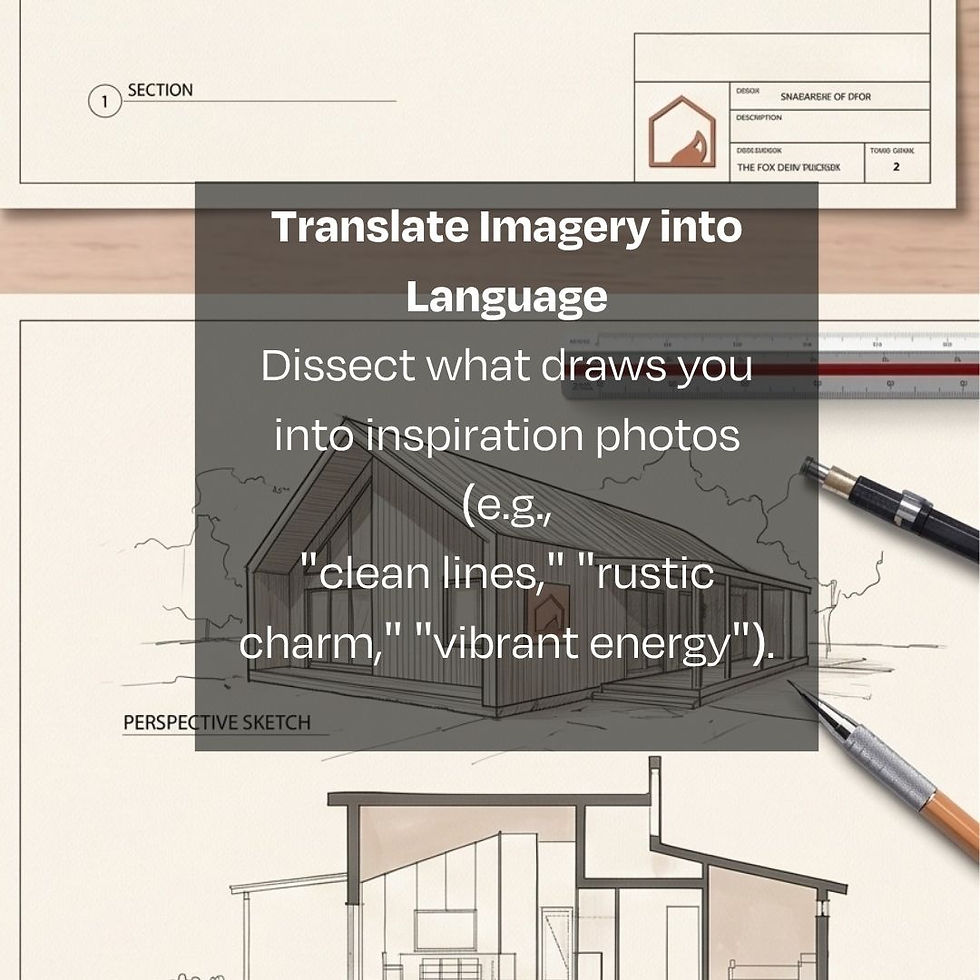
2. Translate Imagery into Language. Look at the photos you’ve saved. Instead of just saying, "I like this kitchen," challenge yourself to dissect why it draws you in. Is it the "clean lines" of the cabinetry? The appeal of the exposed beams? The illumination of the lighting? Pinpoint the specific elements doing the heavy lifting.
3. Build a Rich Lexicon. Sit down and compile a list of at least 20 descriptive words that connect with your ideal space. Don't overthink it—just write. Examples could include: Modern, Inviting, Minimalist, Earthy, Playful, Timeless, Moody, or Tailored. When you bring this lexicon to your design team, it transforms the conversation. Instead of guessing, we can immediately begin designing a space with specific emotional and structural value.

Share your 3 to 5 keywords from your own design lexicon in the comments below, and describe how you want your home to feel. I’m looking forward to reading your responses and starting the conversation!
Need more help getting started? Download our free Dream Home Handbook.


Comments