


Frequently Asked Questions
About Designing and Building A Custom Home
1
How much does it cost to build a custom home?
There are several factors that will affect the overall home construction cost.
Location, square footage, architectural complexity, site conditions (such as a flat lot versus a steep slope), and finish selections are some of the main contributing factors.
Once questions about the site and design are decided, a custom home builder (general contractor) will typically provide a takeoff with either a "cost-plus" or "fixed-cost" model.
To get an idea of current costs per square foot and how they are calculated, read on here.
2
How long does the home design and build process take?
The typical timeline for the entire architectural design and construction process can range from 12 to 24 months.
-
The design and permitting phase usually lasts 3 to 6 months, depending on design changes and the local municipality's (city, county or Homeowner's
Associations) review times.
-
Construction generally takes between 9 and 18 months. This timeline can influenced by the home's size, weather delays, and supply chain availability.
3
Do I need to own land before starting?
To begin the design process, owning land is not necessarily required, but you can only take your plans to far.
To build your home according to your budget, style and needs, you'll need an architect to assist create site specific plans.
Many architectural design firms will offer a free site evaluation to assess a lot before the design process begins. A site survey, preferably with topography included, will provide contour lines and details your home designer will use to determine placement and alignment.

4
Can I Use Plans I Found Online To Build My Home?
Online floor plans are fantastic starting points, but they are essentially generic and don't account for real-world variables.
Before you can break ground, online plans usually need to be adjusted for:
-
Local Building Codes: Engineering requirements vary based on local weather and geology (e.g., wind or snow loads).
-
Site Topography: Your specific lot's slope, soil conditions, and zoning setbacks dictate the foundation and layout.
We encourage you to bring your favorite online plans to Reynard Custom Homes. We will evaluate them against your site conditions and help you determine the most cost-effective path forward—whether that means legally modifying the purchased files or using them as inspiration for a fully custom, site-specific design.
5
How Do I Finance a Custom Home Build?
Unlike buying an existing home with a standard mortgage, financing a custom build typically requires a Construction-to-Permanent Loan.
Here is a quick breakdown of how these loans work:
-
The Construction Phase: Instead of receiving a single lump sum, the loan funds your construction in installments (often called "draws") as your general contractor completes specific building milestones. During this period, you typically only pay interest on the funds that have been drawn so far.
-
The Permanent Phase: Once your new home is fully completed and ready for move-in, the loan seamlessly converts into a traditional, long-term mortgage.
This process protects you and ensures that you are only paying for the work that has actually been completed on your home.
6
How much do you charge for each design revision request?
Nothing.
At Reynard Custom Homes, we do not charge an hourly rate or a per-revision fee for design changes. We operate on an unlimited design revision engagement.
Building a custom home is a major investment, and we want you to be absolutely thrilled with every single detail. We understand that seeing a space come to life can change your perspective on what you want.
That is why our design team provides unlimited revisions from our very first meeting all the way through the construction phase.
Whether you want to rethink the kitchen layout on paper or decide you'd like to adjust a room's flow after framing has started, we will update the designs to reflect your vision at no extra cost for our design time.
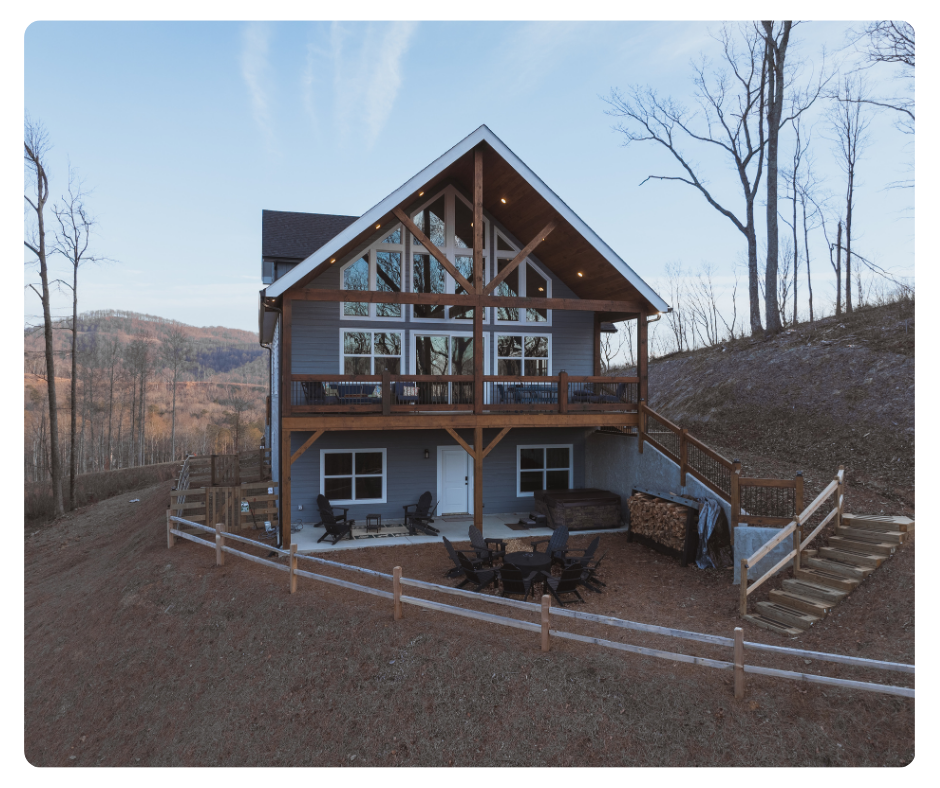
Our Portfolio of Custom Designed Homes




7
How Can I See What My Home Will Look Like Before Construction?
We believe you shouldn't have to guess what your dream home will look like or try to imagine a living space from flat, confusing blueprints.
Because we offer an unlimited design revision engagement, we utilize advanced architectural visualization tools to ensure you are 100% confident in the design before we ever break ground.
During every round of design we provide photorealistic 3D architectural renderings and walk through's.
We translate your architectural plans into high-fidelity 3D models to give you the ability to see detailed, full-color images of your home’s exterior and key interior spaces (like the kitchen, primary suite, and great room) long before construction begins.
8
How Long Has Reynard Been Around and How Many Homes Have You Completed?
Reynard Custom Homes was born from a shared vision in 2020. Our founders—James Knight, Jack Baldwin, and Kalyn Kight—first met while working together at a commercial architectural design firm in Atlanta.
They realized the residential market was missing a truly collaborative, client-first design experience, so we officially launched Reynard in 2021 to bridge that gap.
Since our launch, we have been the architectural force behind over 60 custom homes to date.
Because we are a bespoke design firm rather than a high-volume developer, we purposefully don't focus on churning out hundreds of cookie-cutter houses each year.
9
Why Should I Choose Reynard?
We bridge the gap between high-end architectural design and a truly client-first experience. Here is what sets the Reynard approach apart:
-
Unlimited Design Revisions: We don't charge hourly fees for design changes. We offer unlimited revisions all the way through construction to ensure you are absolutely thrilled.
-
Immersive 3D Visualization: We use advanced 3D modeling and virtual walkthroughs so you can confidently see and "step inside" your space before we ever break ground.
-
Site-Specific Integration: We never just drop a generic floor plan onto a lot. Every home is custom-designed to maximize your specific views, topography, and natural light.