


Architecture Talk with a Custom Home Architect. What is a Transom Window?

Updated: Dec 17, 2025
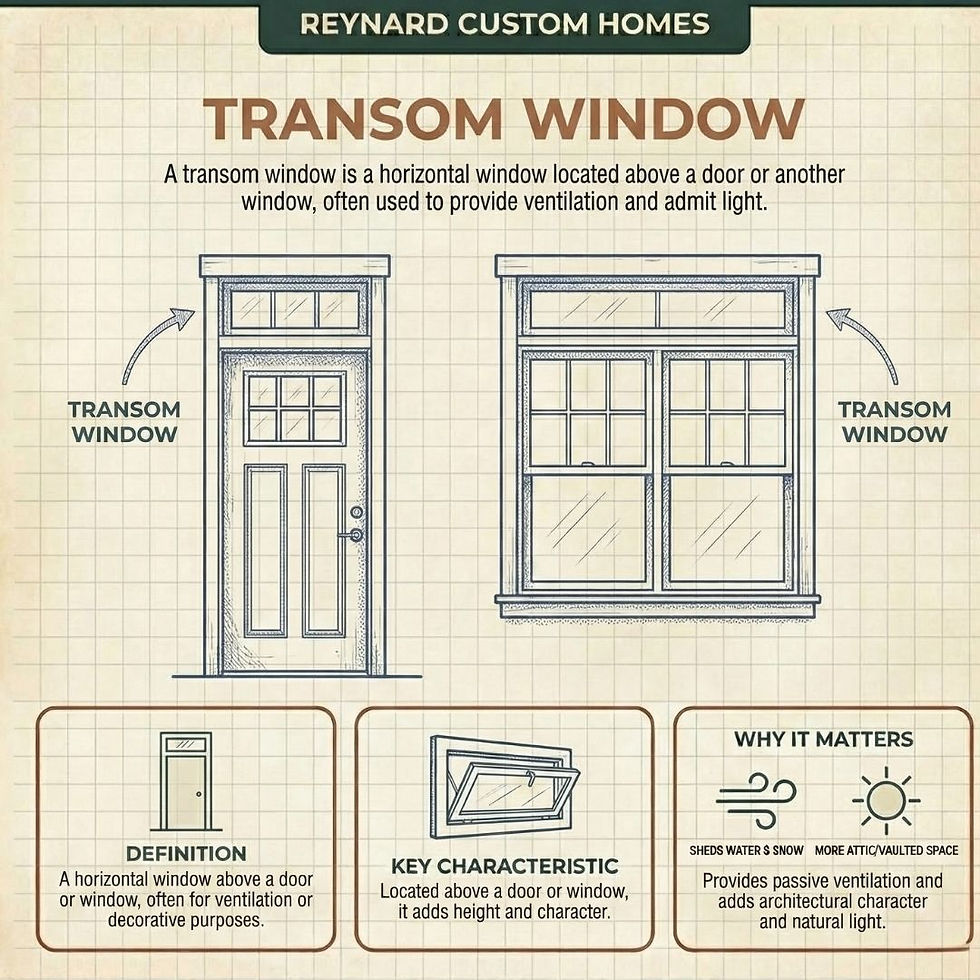
Historically, the term "transom" referred to the horizontal structural beam that separated the top of the door frame from the window above it. Eventually, the name became associated with the window itself. While a transom is typically purely decorative, with fixed panes of glass, many transom windows are designed to open, providing a crucial function beyond aesthetics.
🪟What is it?
A transom is that horizontal window sitting directly above a door or another window. The name comes from the "transom bar"—the structural beam that separates the door frame from the window above it.
Why Do Transom Windows Matter?
Incorporating transoms into a custom home design isn't just about adding more glass; it's a strategic decision that enhances a space's livability. Here is why they are a key characteristic of thoughtful design:
Architectural Character and Height A standard door is functional, but a door topped with a transom window is a statement. As noted in our design guide, a transom acts as a "crown," adding significant visual height and grandeur to an entryway. They draw the eye upward, making ceilings feel taller, and rooms feel more expansive.
Abundant Natural Light. The most significant benefit is allowing more light into the home. Transoms are often positioned higher on the wall than standard windows, allowing sunlight to penetrate deeper into a room. They are perfect for bringing natural light into interior hallways or foyers that might otherwise feel dark or enclosed, all without compromising privacy.
Passive Ventilation. Before air conditioning was standard, operable transom windows were essential tools for climate control. By opening a transom above an interior or exterior door, you allow hot, stale air (which rises) to escape, creating pleasant cross-breezes throughout the home. Even today, they remain an excellent way to freshen a room's air without opening the main door.
🗣️ Speaking the Language: A Tip for Meeting with architect James Knight
When you’re reviewing floor plans with a custom home architect, the right vocabulary can turn a vague idea into a concrete design element instantly.
Instead of saying: "I want the front hall to feel bright, but I don't want glass in the front door because I’m worried about privacy."
Try saying: "James, let's stick with a solid wood entry door, but add a rectangular transom above it to capture that southern light."
Why it works: Knowing the term helps us nail your design intent faster. You get the privacy of a solid door and the natural light you crave—and James knows exactly what to draw.


Comments